Some people out there may dismiss me, thinking that I must live in a very boring reading world if I will never try anything different, but you see, I do, every time I pick up a book. I firmly believe, along with David Grigg, whose original post on G+ got me thinking about this, that every writer can and should bring their own take to any story and that is what interests me, the angle, not the subject. I know what subjects I like, so I am disappointed when editors/agents etc, will throw something out because it is something that they've 'seen too much of' - that may be so, but the reading public likes new takes on old stories, otherwise why would all these people be rewriting fairytales at the moment? (Aside - to be fair, I don't disagree with the entire list that David refers to in his post from Strange Horizons, because some of the items are explained enough to make it plain that what they object to is unoriginal writing, or writing that doesn't progress, not necessarily the trope itself).
Sunday, 21 October 2012
Sod Originality!
Okay, that may be a bit harsh, but when I'm reading, I don't want experimental, I don't want off-the-wall, I like my tropes, my clichés and I hug them happily to my bosom. Which is why I don't tend to read magazines that post lists of stuff 'they've seen too many times' and why every time I'll pick up the book about the lonely superhero (substitute here vampire, ghost, werewolf, alien, cyborg - you get the picture :) ) struggling to come to terms with his/her situation over the one about the transcendental experience of a human communicating with a jellyfish from the point of view of the jellyfish! I have my bullet-proof kinks (substitute plot, trope, cliché) and I actually like reading different takes on said kinks.
Note the word different in my last sentence, which is why I was being rather too blasé when I said sod originality, because, yeah, I don't want to read exactly the same thing over and over again. If you write me vampires, give me your take on vampires, be they sparkly, psychopathic or plain mysterious, I will give most of them a try, since I have a thing for vampires, but I don't want Dracula or Twilight all over again, KTHX. :) The same applies to any trope, cliché or situation that falls into my bucket of favourite things to read. Surprise me with the pieces that make up the whole: your writing style; the character nuances; the plot twists; and yes, even the dream sequences (I'm not averse to a well-done dream sequence, take note, publishers :P). But when you put all those pieces together, I want a whole that makes sense, that takes me on a complete journey, a traditional, literary journey. I do not want to be stranded in some experimental field halfway between the start and the end of the book just to make it different - I get grumpy when someone tries too hard to be that different.
Some people out there may dismiss me, thinking that I must live in a very boring reading world if I will never try anything different, but you see, I do, every time I pick up a book. I firmly believe, along with David Grigg, whose original post on G+ got me thinking about this, that every writer can and should bring their own take to any story and that is what interests me, the angle, not the subject. I know what subjects I like, so I am disappointed when editors/agents etc, will throw something out because it is something that they've 'seen too much of' - that may be so, but the reading public likes new takes on old stories, otherwise why would all these people be rewriting fairytales at the moment? (Aside - to be fair, I don't disagree with the entire list that David refers to in his post from Strange Horizons, because some of the items are explained enough to make it plain that what they object to is unoriginal writing, or writing that doesn't progress, not necessarily the trope itself).
So, I suppose my message to any writer out there I may start reading is don't try too hard to be original, well, not for me anyway. I like the traditional shape of stories. I like feeling safe with an author whom I know isn't going to suddenly throw my reading journey to the wolves of different. Yes, I like surprises, but don't make them too big :P.
Some people out there may dismiss me, thinking that I must live in a very boring reading world if I will never try anything different, but you see, I do, every time I pick up a book. I firmly believe, along with David Grigg, whose original post on G+ got me thinking about this, that every writer can and should bring their own take to any story and that is what interests me, the angle, not the subject. I know what subjects I like, so I am disappointed when editors/agents etc, will throw something out because it is something that they've 'seen too much of' - that may be so, but the reading public likes new takes on old stories, otherwise why would all these people be rewriting fairytales at the moment? (Aside - to be fair, I don't disagree with the entire list that David refers to in his post from Strange Horizons, because some of the items are explained enough to make it plain that what they object to is unoriginal writing, or writing that doesn't progress, not necessarily the trope itself).
Saturday, 20 October 2012
The Terror of Titles!
I don't know about everyone else, but I have a terrible time with titles. The issue has come up this time, because I'm about to launch into the sequel to Death In The Family, my vampire YA paranormal novel for NaNoWriMo and I have no title, not even a working title for it, except Heritage is Deadly #2! I feel bad about not having a title, the idea doesn't seem complete in my mind yet, even though the planning is going well, which is daft, but it's exactly like character names, if I don't get the name right, the character doesn't work. Well, okay, it's not quite that bad when it comes to book titles, I can get on with a book without the 'right' title, but I still need a label in my mind to fit to it. I know, I'm a little loopy, but I can't help it. :P
Death In The Family had a host of titles before I decided on the final one, but then it was in development for a large number of years. I think my final choice sums up the essence of the novel, Tom's discoveries, the challenges he faces and also the threat from the supernatural. However, it does have it disadvantages in a search, since there are a wide range of books with similar titles. I don't think I'll change it at this stage, but I will try to be a bit more original for the second book.
So, creating a title for the sequel - ugh! It is so difficult to sum up the essence of a whole book with, at most in my opinion, five little words. I think I will try a technique I haven't tried before for this title: I will play word association. I'll throw words that fit with the story at a mindmap and then sift through them for the most appropriate. Hopefully, this should provide some inspiration - wish me luck!
Death In The Family had a host of titles before I decided on the final one, but then it was in development for a large number of years. I think my final choice sums up the essence of the novel, Tom's discoveries, the challenges he faces and also the threat from the supernatural. However, it does have it disadvantages in a search, since there are a wide range of books with similar titles. I don't think I'll change it at this stage, but I will try to be a bit more original for the second book.
So, creating a title for the sequel - ugh! It is so difficult to sum up the essence of a whole book with, at most in my opinion, five little words. I think I will try a technique I haven't tried before for this title: I will play word association. I'll throw words that fit with the story at a mindmap and then sift through them for the most appropriate. Hopefully, this should provide some inspiration - wish me luck!
Wednesday, 17 October 2012
I'm Diving into Novel Planning
It's mindmap time!
Today, I am launching into the planning phase for Heritage is Deadly #2. Up until now, I've had all these ideas swimming around in my head, all the points I know have to end up in the plot, but apart from the obvious bits, i.e. the start and the end, they have no coherent order.
My first challenge is actually defining each of those points, which is where my mindmap comes in. I use Freeplane, which is freeware and is great for just blasting all my thoughts down. For those who don't know what a mindmap is, it looks a bit like a spider's web, with linked nodes. It's a great way for brainstorming ideas, because the only thing you need is connections, you don't have to structure a hierarchy you can just throw thoughts down and then rearrange them later. It's the high-tech version of postits and string on the wall :).
Today, I am launching into the planning phase for Heritage is Deadly #2. Up until now, I've had all these ideas swimming around in my head, all the points I know have to end up in the plot, but apart from the obvious bits, i.e. the start and the end, they have no coherent order.
My first challenge is actually defining each of those points, which is where my mindmap comes in. I use Freeplane, which is freeware and is great for just blasting all my thoughts down. For those who don't know what a mindmap is, it looks a bit like a spider's web, with linked nodes. It's a great way for brainstorming ideas, because the only thing you need is connections, you don't have to structure a hierarchy you can just throw thoughts down and then rearrange them later. It's the high-tech version of postits and string on the wall :).
![]() |
| 5 mins of Mindmap for Heritage is Deadly 2 |
After just five mins, this was my mindmap for Heritage is Deadly 2. Excuse the redactions, but some things I'd like to keep to myself :), but I hope it gives those of you've who've never used mindmaps an idea of how they help get ideas out of my head and into some kind of coherent picture. I nearly always start with links between characters, since that is how my head works, then I try to flesh out what those links are. Mindmaps aren't only good for plot planning, though. I've used them for character building as well.
Once I've got all my plot points down (a while to go yet), I'll start on a full scene by scene plan for the novel and try and put these plot points into order :). That'll be in Scrivener, a tool for writers that allows me to collate all my notes and draft my novel as well. It's not free, but it's well worth the £27.27 for the licence. I'm looking forward to it, actually, I have a good feeling about this novel :D. I should be ready for NoNoWriMo when November comes around!
Tuesday, 16 October 2012
EIN vs ITIN - EIN is a world less painful!
I thought I'd share this, since I've been dreading having to apply for my ITIN (Individual Taxpayer Identification Number) and then some nice person pointed out that if I am an indie author publishing my own books in the UK (and other nations), I can actually apply as a sole trader for an EIN (Employer Identification Number), rather than an ITIN, which is a whole lot easier than applying for an ITIN.
Taking a step back to explain this - if you are getting paid by Amazon, Smashwords, Google Play or anyone else based in the US and you are not in the UK, you will get slapped for 30% tax from the US IF you don't give your 'payer', i.e. Amazon, a completed W-8BEN form with an ITIN on it or an EIN (link to w-8ben and instructions for w-8ben).
I found two very useful resources online:
This has an example form for amazon (ignore the ITIN, use EIN)
and
this gives you a step by step guide to filling the 8W form in for Amazon, Smashwords and Createspace.
The second set of info gives you an extra bit of the form to fill in, because, the withholding percentage is different for different types of royalties, which is listed in the instructions. The first example direct from Amazon does not list this, but (and this is my supposition, so don't take my word for it) it might apply if you wanted to spread your tax payments for royalties over more than one year, which authors are allowed to do in the UK, rather than just looking on them as standard self employment income.
Registering as self-employed in the UK is really easy, just go online to hmrc.gov.uk and follow the links for registering.
I had my EIN within 10 minutes and I'm currently filling in all my forms. I will update this post if I have any follow up problems.
EDIT: having been through this with Amazon and just got my 0% withholding, this is the best example form to copy for them, just use your EIN, rather than an ITIN: W-8BEN for an individual Amazon
Taking a step back to explain this - if you are getting paid by Amazon, Smashwords, Google Play or anyone else based in the US and you are not in the UK, you will get slapped for 30% tax from the US IF you don't give your 'payer', i.e. Amazon, a completed W-8BEN form with an ITIN on it or an EIN (link to w-8ben and instructions for w-8ben).
I found two very useful resources online:
This has an example form for amazon (ignore the ITIN, use EIN)
and
this gives you a step by step guide to filling the 8W form in for Amazon, Smashwords and Createspace.
The second set of info gives you an extra bit of the form to fill in, because, the withholding percentage is different for different types of royalties, which is listed in the instructions. The first example direct from Amazon does not list this, but (and this is my supposition, so don't take my word for it) it might apply if you wanted to spread your tax payments for royalties over more than one year, which authors are allowed to do in the UK, rather than just looking on them as standard self employment income.
Registering as self-employed in the UK is really easy, just go online to hmrc.gov.uk and follow the links for registering.
I had my EIN within 10 minutes and I'm currently filling in all my forms. I will update this post if I have any follow up problems.
EDIT: having been through this with Amazon and just got my 0% withholding, this is the best example form to copy for them, just use your EIN, rather than an ITIN: W-8BEN for an individual Amazon
Saturday, 13 October 2012
Yes! I have a complete plot for Heritage is Deadly #2 ready for NaNo!
Finally, I have had the revelation that has given me the complete plot for the sequel to Death In The Family. I was getting a little worried there as NaNoWriMo edged ever closer and I was still struggling with the non-emotional tension in the story. I already had most of the emotional conflict planned, the people and issues that would be facing Tom as he begins to accept and explore his vampire side. However, I was missing the threat, the tangible conflict that would push the plot and the series arc forward.
AND NOW I KNOW WHAT IT WILL BE - YAY!
Some people might wonder why I was worried about tangible, because emotion can push a plot forward just as successfully, but I have established, I hope, that The Heritage Is Deadly Series is in fact YA paranormal action adventure, and I didn't want to stray from that formula. Yes, Tom has emotions, he's facing an uphill battle to understand what has happened to him, but that was not enough to lay a second book on, nor, indeed to carry the series forward.
Then, I looked back to the stories that Death In The Family is based on, the plots that I've thrown away because I have shifted the focus of the stories. In there, I found a vague reference to an enemy, someone who would have come up in one later story in the originals, a bit of a sledgehammer of a character. However, in that fledgling idea, I think I have found my threat: much more amorphous than in the original plot, an unknown quantity pulling strings, manipulating situations, only slowly being revealed. Book #2 will be this character's introduction, opening up Tom's world from personal things and Coombedown to a bigger stage.
I'm really rather excited about this :D.
Right, must pop off and go plan the plot properly for NaNo now that I have one.
Tuesday, 2 October 2012
NaNoWriMo 2012 - Count me In!
Okay, I'm putting my stake in the ground: I am going to be participating in NaNoWriMo in November 2012.
For those of you who don't know what NaNo is, I cadged this off their site: National Novel Writing Month is a fun, seat-of-your-pants approach to novel writing. Participants begin writing on November 1. The goal is to write a 50,000-word (approximately 175-page) novel by 11:59:59 PM on November 30. Valuing enthusiasm and perseverance over painstaking craft, NaNoWriMo is a novel-writing program for everyone who has thought fleetingly about writing a novel but has been scared away by the time and effort involved.
As you spend November writing, you can draw comfort from the fact that, all around the world, other National Novel Writing Month participants are going through the same joys and sorrows of producing the Great Frantic Novel. Wrimos meet throughout the month to offer encouragement, commiseration, and—when the thing is done—the kind of raucous celebrations that tend to frighten animals and small children.
In 2011, we had 256,618 participants and 36,843 of them crossed the 50K finish line by the midnight deadline, entering into the annals of NaNoWriMo superstardom forever. They started the month as auto mechanics, out-of-work actors, and middle school English teachers. They walked away novelists.
My goal is 90K wds, since I want to get the first draft of my next novel completed (that's 3K a day - eek!). It's the sequel to Death In The Family. I don't have a title yet, but I have most of a plot worked out: Tom Franklin is slowly learning to cope with the supernatural changes that overtook him when he returned to his birth place of Coombedown, but after a long, difficult Summer, there are more challenges to face and his hazy memory is not helping. On top of the continuing changes to his body, Tom has to deal with The Powers That Be, some of whom aren't happy with him walking free, while supporting his 'little brother', Sean in his first days at a new school and trying to patch up his friendship with Phil. Tom thinks he has enough on his plate, but then a new arrival throws his isolated world into turmoil.
I may just be sharing my anguish progress with my blog from time to time! ;P
Guest Post: Gabriel Fitzpatrick - Romance in the Digital Age
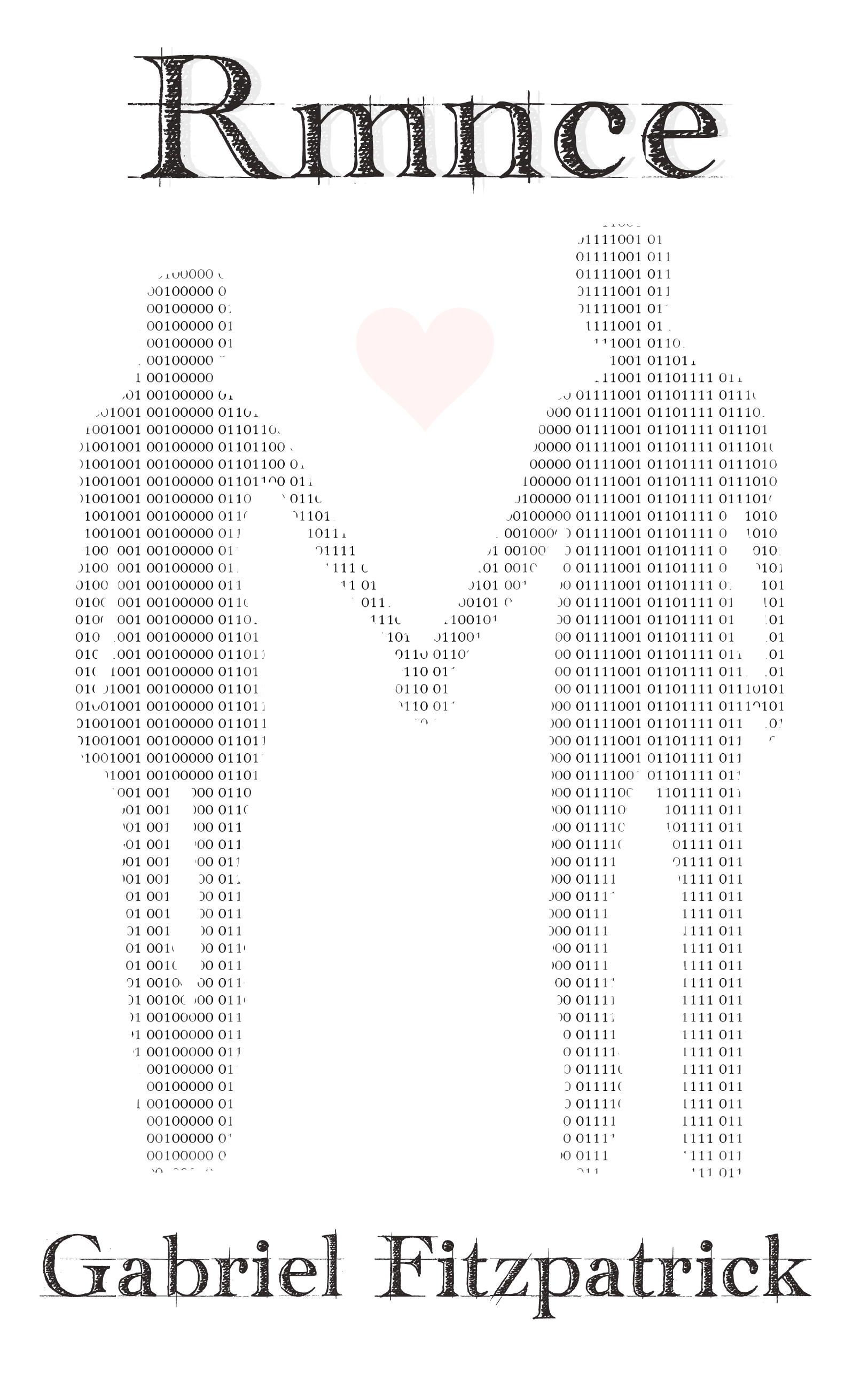
Today, I am happy to welcome Gabriel Fitzpatrick to my blog as part of his Rmnce blog tour.
Romance in the Digital Age is a line I’ve used from early on in the Rmnce process. It’s the sort of catchy, newsy sort of tagline that the lizard business brain spits out for me from time to time when he feels me flailing about hopelessly for a descriptor. However, in this case he has struck quite to the heart of the thing, because romance in the digital age differs from romance in the age of written letters in much the same way that age differed from the one in the time before literacy became widespread. That is to say, it doesn’t.
Romance is a fundamental human characteristic, and like all fundamental human characteristics it changes so slowly as to be imperceptible, so vastly outstripped by technological advance as to be effectively fixed.
Why, then, would I even write a book about romance in the digital age? The answer to that question is simple: Someone needs to demonstrate that fact. There is a generational divide between those who grew up when a computer was something everyone had and those who grew up when it was something big businesses used for accounting, and another between those people and those who grew up before there even was such a thing. These divides are, in some ways, natural, but they must be overcome if we are to call ourselves enlightened.
By shining the light of an old artform, that of literature, onto the digitized screens of modernity, I hope to show that commonality, to bring people together in the realization that their prejudices are meaningless and self-created.
Gabriel’s new book, Rmnce, hit digital shelves October 1st! Find it on Amazon and Smashwords.
Rmnce series is a love story told in 4 parts. It follows a couple from the first drunkenly passionate days of their college romance all the way through a life together, often tumultuous, always overwhelming, and overridingly disquieting as only true love can be.
Rmnce is not, however, your traditional love story. Or perhaps more accurately, it does not appear to be your traditional love story. It is written entirely through the communications of the couple. Text messages, emails, and even a few old-fashioned letters make up the entirety of a story, what one early reader termed "A story not so much written as formed organically in the negative space."
It is, in short, a commentary on love in the digital age, a tribute to the great love affairs of the digital generation, romance not lost in the sea of text-speak and instant gratification, but merely obscured from the prying eyes of those too far removed from its cultural roots.
~
Romance in the Digital Age is a line I’ve used from early on in the Rmnce process. It’s the sort of catchy, newsy sort of tagline that the lizard business brain spits out for me from time to time when he feels me flailing about hopelessly for a descriptor. However, in this case he has struck quite to the heart of the thing, because romance in the digital age differs from romance in the age of written letters in much the same way that age differed from the one in the time before literacy became widespread. That is to say, it doesn’t.
Romance is a fundamental human characteristic, and like all fundamental human characteristics it changes so slowly as to be imperceptible, so vastly outstripped by technological advance as to be effectively fixed.
Why, then, would I even write a book about romance in the digital age? The answer to that question is simple: Someone needs to demonstrate that fact. There is a generational divide between those who grew up when a computer was something everyone had and those who grew up when it was something big businesses used for accounting, and another between those people and those who grew up before there even was such a thing. These divides are, in some ways, natural, but they must be overcome if we are to call ourselves enlightened.
By shining the light of an old artform, that of literature, onto the digitized screens of modernity, I hope to show that commonality, to bring people together in the realization that their prejudices are meaningless and self-created.
~
Gabriel’s new book, Rmnce, hit digital shelves October 1st! Find it on Amazon and Smashwords.
Rmnce series is a love story told in 4 parts. It follows a couple from the first drunkenly passionate days of their college romance all the way through a life together, often tumultuous, always overwhelming, and overridingly disquieting as only true love can be.
Rmnce is not, however, your traditional love story. Or perhaps more accurately, it does not appear to be your traditional love story. It is written entirely through the communications of the couple. Text messages, emails, and even a few old-fashioned letters make up the entirety of a story, what one early reader termed "A story not so much written as formed organically in the negative space."
It is, in short, a commentary on love in the digital age, a tribute to the great love affairs of the digital generation, romance not lost in the sea of text-speak and instant gratification, but merely obscured from the prying eyes of those too far removed from its cultural roots.
Subscribe to:
Posts (Atom)